US Expels Cuban UN Diplomat as Fuel Squeeze Deepens Havana's Crisis
After a scuffle at the UN embargo debate, Washington ordered a Cuban diplomat out as support for Havana slipped and US fuel interdictions deepened blackouts.
By Rhyme Desk3 min read9 sourcesRhyme index 64
The United States has ordered a member of Cuba's UN mission to leave the country after a scuffle in the General Assembly, a day before the annual vote against the US embargo drew Havana's weakest support in about three decades.
What happened
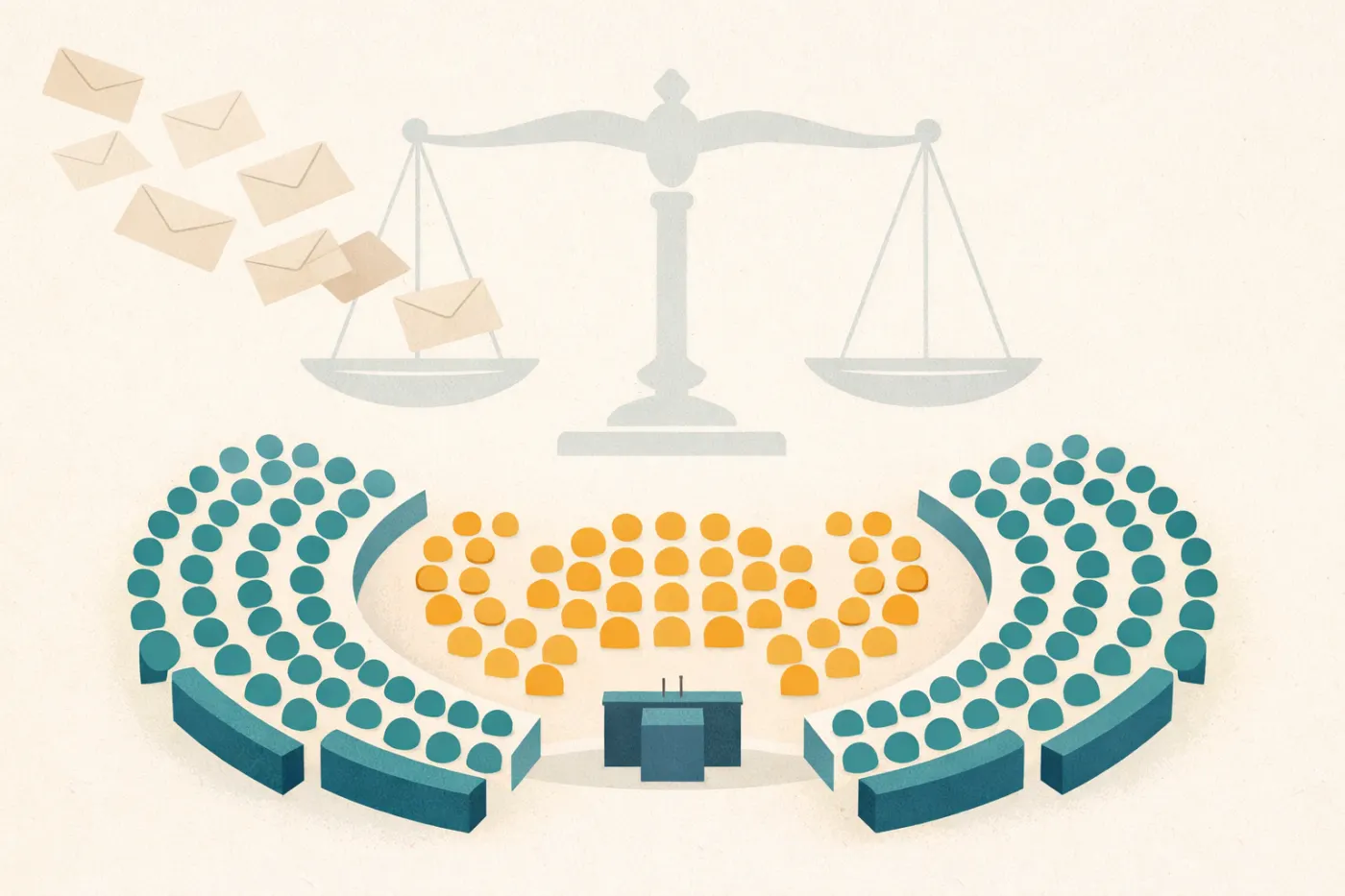
The confrontation came on Tuesday 27 October, during the Assembly's annual debate on the embargo. Cuban representatives loudly interrupted the speech of Mike Waltz, the US ambassador to the UN, who displayed photographs of Fidel Castro and President Miguel Díaz-Canel wearing Rolex watches. Foreign Minister Bruno Rodríguez Parrilla left his seat and approached the podium, and the Assembly's president, Khalilur Rahman, briefly suspended the session.
A Cuban official was recorded trying to grab a phone from Waltz's spokesman, JP Freire, who was filming the exchange. Waltz told the Cubans: "This isn't your communist dictatorship" and "This is America. Back up!" That night he said on Fox News that Secretary of State Marco Rubio had signed an expulsion order, that the diplomat had "pushed" a US diplomat, and that he would be "on a plane to Havana within the next 24 hours". His departure has not been independently confirmed.
Cuban media identified the official as Richard Tur de la Concepción, first secretary of the mission. A State Department spokesperson told CNN only that "this person is not welcome in the United States". Havana disputes the US account: in a letter to Secretary-General António Guterres it said its diplomat had been pressured by a US representative. Rodríguez condemned "the disrespectful, provocative attitude" of the US delegation and wrote online: "Mr. Waltz, you are lying again."
On Wednesday the Assembly adopted resolution A/81/L.5, calling for an end to the embargo, by 130 votes to 17 with 25 abstentions. It was the 34th such vote. The tally compares with 187 to 2 in 2024 and 165 to 7 in 2025; AFP described it as the weakest backing in three decades.
The vote came as Cuba endures a deep energy crisis. Oil from Venezuela and Mexico stopped after the US ousted Nicolás Maduro in January, and Washington has since moved to stop Cuba-bound fuel. Al Jazeera reports that only one Russian tanker has reached Havana since the Anatoly Kolodkin was allowed in at the end of March. CBS reported 90 intercepted Cuba-bound biodiesel shipments worth nearly $3 million, and blackouts disrupting water supplies for roughly 3.5 million people. Waltz denied any blockade exists, saying US firms had sold Cuba $876 million of goods this year, including about a quarter of a billion dollars of fuel; Al Jazeera reports that US fuel goes to Cuba's private sector while state industries are largely shut out.
Why it matters
The expulsion is a small act with a clear signal. Washington is no longer content with the embargo's slow attrition and is prepared to confront Havana openly, even in a forum where the US has been isolated on this issue for three decades.
That isolation is eroding. After a US lobbying push, the number of countries backing Cuba fell by 35 in a single year, and the votes against the resolution rose from 7 to 17.
For Cubans the stakes are physical: fuel for power stations and water pumps. The squeeze is designed to hit the state sector while private firms can still buy American fuel, an attempt to separate the government from the economy it runs.
The rhyme
Two patterns fit. The first is the energy squeeze on an isolated government: Rhodesia under the Royal Navy's Beira Patrol, Cuba itself after Soviet oil vanished in 1990, Iraq and Yugoslavia under UN interdiction, Venezuela under US oil sanctions. In none did an oil cutoff topple a government within a year. Regimes rationed, adapted and endured; where they fell, it came years later, through negotiation or outside force.
The second is narrower: US expulsions of Cuban diplomats in 2002, 2003, 2017 and 2019. Havana protested loudly but did not match them, and each episode deepened a freeze rather than breaking the relationship. The biggest divergence today is that the same administration has already used force to remove a government in the region, which makes the tail risks heavier than history alone suggests.
The patterns below are the historical set-ups this story most resembles. The score is a 0–100 measure of how closely the conditions match; the "where it breaks" note is as important as the match.
When an isolated government loses its oil supply through sanctions, interdiction or the loss of a patron, it typically rations, adapts and survives for years; outright change has come later, through negotiation or outside force rather than the squeeze alone.
ThenAn isolated government lost its main oil supply, through outside sanctions, naval interdiction or the collapse of a patron. Blackouts, shortages and economic contraction followed, while the pressuring power hoped for capitulation or collapse.
NowCuba lost Venezuelan and Mexican oil in January, and US sanctions and interdictions have since kept most Cuba-bound tankers away. Blackouts are disrupting water supplies for millions, and Washington's goal is openly political.
Where it breaks: The enforcer has just removed a neighbouring leader by force, a precedent absent from most cases until years into the squeeze; this pushes toward a faster, sharper resolution than the base rate implies.
Washington has repeatedly expelled Cuban diplomats, often from the UN mission; Havana has answered with loud protest rather than matching expulsions, and the episodes have deepened freezes without severing relations.
ThenWashington expelled Cuban diplomats, often from the UN mission, citing espionage, influence operations or unexplained health incidents. Havana denounced the move as slander but did not answer with matching expulsions, and relations settled into a deeper freeze.
NowThe US has expelled a Cuban UN first secretary after a filmed scuffle on the Assembly floor, with the same foreign minister, Rodríguez, leading Havana's response. Cuba has protested in letters and online but, so far, has announced no reciprocal step.
Where it breaks: The trigger is a public physical clash rather than an intelligence case, and Cuba is courting votes for a UN candidacy; both give Havana reason to contain the row, pushing toward the protest-only outcome.
The sixth strike on the airport in a month came after an evacuation warning and as government forces, backed by Saudi air power, opened an offensive towards the Red Sea coast near Bab el-Mandeb.
Rafael Grossi told the Security Council that remote monitoring shows no reconstruction since the June 2025 strikes, while Tehran keeps inspectors out of most sites and announces a new enrichment plant at Isfahan.