IAEA sees no rebuilding at Iran's bombed sites; 440 kg of uranium still untraced
Rafael Grossi told the Security Council that remote monitoring shows no reconstruction since the June 2025 strikes, while Tehran keeps inspectors out of most sites and announces a new enrichment plant at Isfahan.
By Rhyme Desk2 min read4 sourcesRhyme index 72
The International Atomic Energy Agency has found no evidence that Iran has rebuilt the nuclear facilities damaged by US and Israeli strikes in June 2025, its director-general told the UN Security Council on Monday, but said the agency still cannot verify the state of the sites or the whereabouts of some 440 kilograms of highly enriched uranium.
What happened
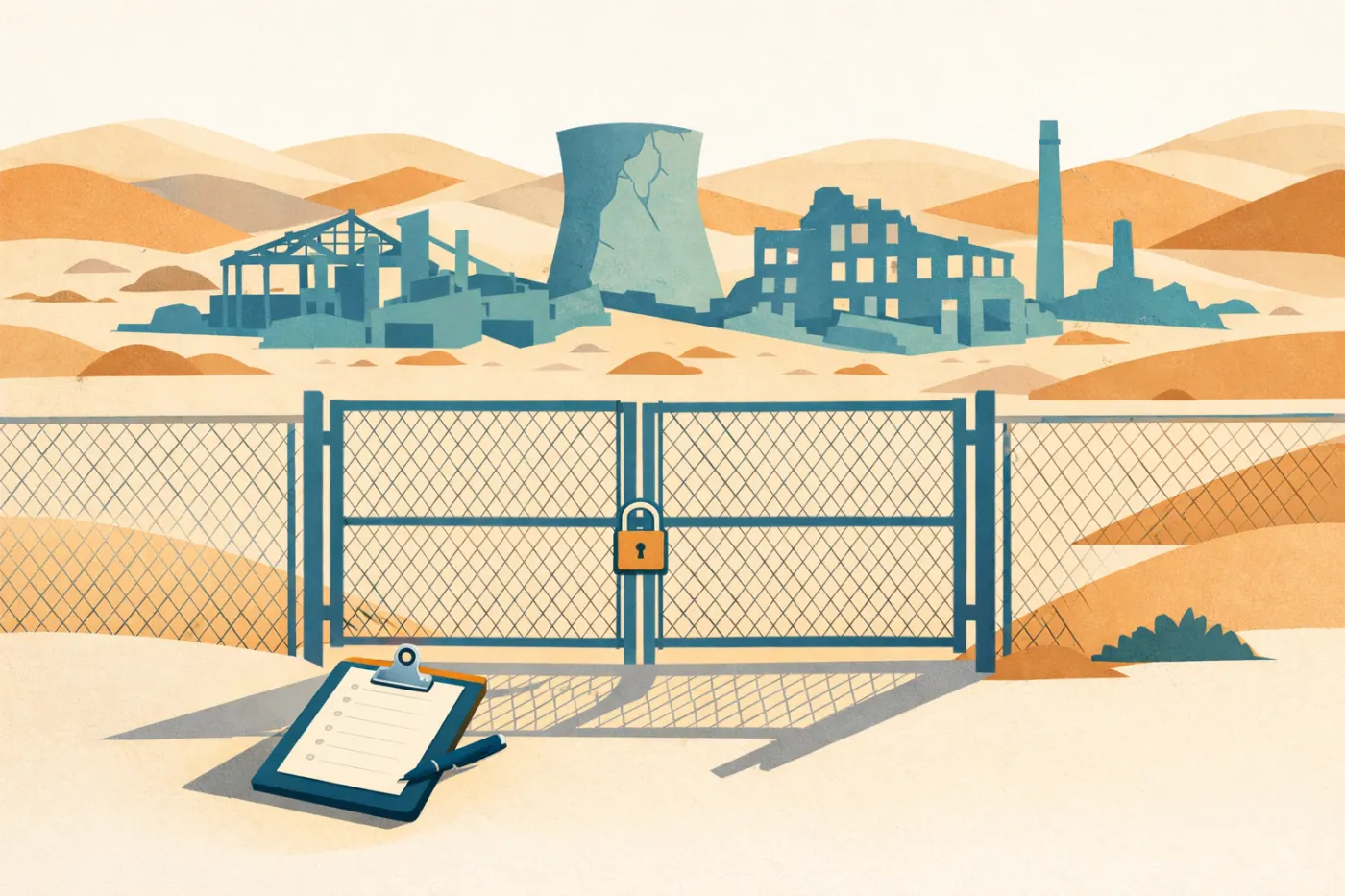
Rafael Grossi said the agency's monitoring had turned up no reconstruction work at the struck sites since June 2025, even as Tehran continues to deny inspectors access to most of its nuclear facilities. He stressed that remote monitoring "cannot substitute for physical checks," which remain necessary to establish the actual condition of the facilities and to verify Iran's nuclear activities.
The uranium gap is the agency's central concern. The IAEA has been unable to confirm the location of approximately 440 kilograms of uranium enriched to 60%, previously declared by Iran, since inspections were disrupted by the strikes. Grossi also asked for access to the Isfahan Fuel Enrichment Plant, a new facility Iran has announced plans for. The briefing follows the IAEA board's decision in September to refer Iran to the Security Council over continued violations of its safeguards obligations.
The political backdrop is a continuing regional conflict. Asked this week about further strikes on Iran after the US midterm elections, President Trump said "anything's possible."
Why it matters
Both camps will read the report as confirmation. For those who argued the strikes worked, the absence of rebuilding is the proof. For those who argued they would drive the programme underground, the missing uranium and the new, undisclosed enrichment plant are the proof. The agency is saying, as plainly as it can, that it cannot settle the argument from outside the fence.
The rhyme
Bombed nuclear programmes have a pattern. Iraq rebuilt nothing at Osirak and built a larger covert programme that inspectors found only after a war. Syria bulldozed Al Kibar and gave up. Iran recovered from Stuxnet within a year and expanded. Iraq's programme was dismantled only when inspectors were inside for seven years, and the uncertainty after they left became a casus belli. The variable that decided every case was inspector access, which is exactly what is missing now.
The patterns below are the historical set-ups this story most resembles. The score is a 0–100 measure of how closely the conditions match; the "where it breaks" note is as important as the match.
A state's nuclear facilities are destroyed by airstrikes or sabotage, inspectors lose access, and the world is left reading satellite images for signs of rebuilding. The record says the visible sites usually stay quiet while the programme goes somewhere less visible.
ThenAfter Osirak, Al Kibar and Stuxnet the visible sites went quiet while inspectors were kept out or limited. Iraq rebuilt covertly, Syria abandoned the effort, Iran rebuilt openly within a year. Only Iraq under seven years of UNSCOM inspections was verifiably dismantled.
NowNo visible repairs sixteen months after the strikes, inspectors barred from most sites, 440 kilograms of 60% uranium unaccounted for, a new enrichment plant announced at Isfahan, and the attacking side keeping further strikes on the table.
Where it breaks: Iran's programme was far larger and more dispersed than Iraq's in 1981 or Syria's in 2007 before it was hit, and it has already demonstrated once, after Stuxnet, that it rebuilds. That weights this match towards the covert-dispersal outcome and away from abandonment.
The sixth strike on the airport in a month came after an evacuation warning and as government forces, backed by Saudi air power, opened an offensive towards the Red Sea coast near Bab el-Mandeb.
After a scuffle at the UN embargo debate, Washington ordered a Cuban diplomat out as support for Havana slipped and US fuel interdictions deepened blackouts.