Israel election deadlock: Netanyahu alleges fraud as count goes on
With about 90% counted, neither bloc has 61 seats, Arab parties hit a record 19, and Likud alleges fraud that police say has no supporting evidence.
By Rhyme Desk3 min read10 sourcesRhyme index 65
Israel's first election since the 7 October 2023 attacks has left both main blocs short of a majority, and Benjamin Netanyahu's Likud is accusing Arab parties of having "stolen" the vote while counting continues.
What happened
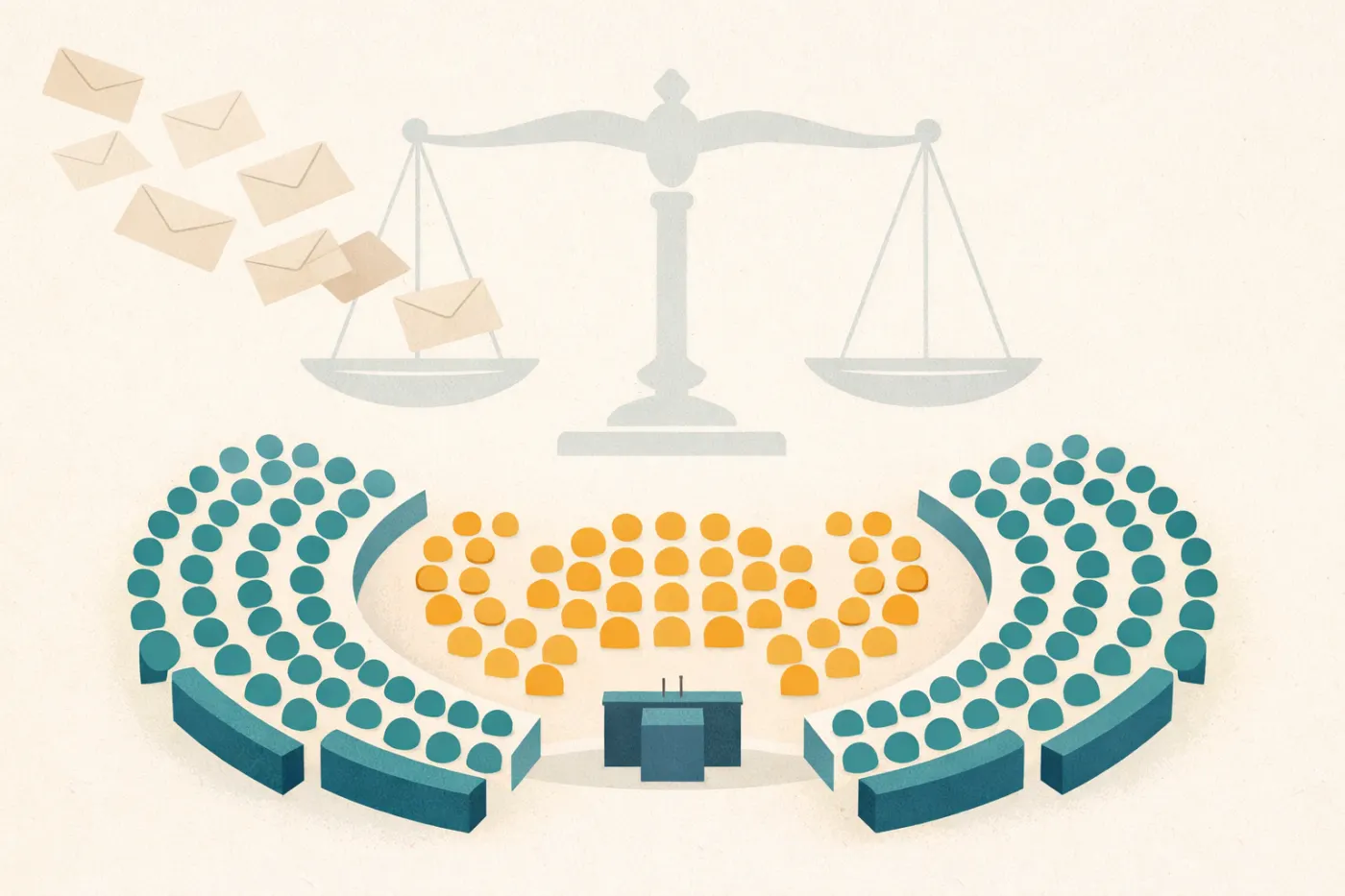
Israel's general election on Tuesday 27 October has produced no clear winner. With about 90% of votes counted, partial results from the Central Elections Committee (CEC) gave Benjamin Netanyahu's bloc 53 seats and the bloc led by Gadi Eisenkot 48, with Arab-led parties on a record 19. A majority in the 120-seat Knesset is 61.
Likud is the largest party on 26 seats, ahead of Eisenkot's Yashar on 21. The opposition bloc comprises Yashar, B'Yachad, Yisrael Beytenu and the Democrats. The Arab-led lists are the Joint List, headed by Yousef Jabareen, and Ra'am, led by Mansour Abbas. Double-envelope absentee ballots and ballots needing extra checks are still being counted and could shift seats, particularly for lists near the 3.25% threshold.
On Wednesday evening Netanyahu shared on X a Likud statement accusing Arab parties of having "stolen" the election through bribery, threats, forgery and double voting, and demanding investigations by the police, the Shin Bet domestic security service and the CEC. Likud says it is handing over "hundreds of testimonies" but has not made its evidence public. Hebrew media had reported before the vote that the party had prepared complaints in advance.
Officials pushed back. Acting CEC Director-General Dean Livne wrote that the vote was "conducted lawfully" and that he knew of no basis for claims of systematic violations, although the committee says it is reviewing the allegations. A police source said there was "no investigative- or intelligence-based supporting evidence" and that election day saw very few integrity incidents, even compared with past elections.
Eisenkot has said his task is "bringing change to Israel and forming a Zionist government committed to military conscription." The Joint List said Arab turnout had denied Netanyahu a majority and rejected a "government of butchers". President Isaac Herzog urged parties to avoid another election and to keep an "open mind" in coalition talks.
Why it matters
The arithmetic and the politics point in different directions. Opposition and Arab parties together hold about 67 seats, but no Zionist opposition leader has said he would depend on the Joint List or Ra'am. Eisenkot's wording sidesteps the question.
The fraud claim narrows that room further. By casting Arab votes as illegitimate before the count is final, Likud raises the political cost of any coalition that relies on them, whatever the CEC eventually certifies.
The security backdrop raises the stakes. Netanyahu, whose coalition held 68 seats in the outgoing Knesset, now governs as caretaker. That limits him, but he keeps war powers while a possible attack on Iran is discussed.
The rhyme
Israel has been here before. Between 2019 and 2021 it held four elections in about two years. Twice the Knesset failed to form a government at all; once the deadlock ended in a cross-bloc unity deal; and in 2021 a fragile coalition took office with Ra'am, the first Arab party in an Israeli government. Netanyahu called that outcome fraud too.
Across Israel's deadlocks in which Arab parties held the balance, going back to Yitzhak Rabin's government in 1992, outcomes have split between a change government relying on Arab votes, a return to the polls and, less often, a unity deal.
The wider family is the losing side alleging fraud while institutions hold firm, as in the United States in 2020 and Brazil in 2022. There, results stood, but not without unrest. Israel's version differs: the claim targets less the count itself than the legitimacy of a potential coalition partner.
The patterns below are the historical set-ups this story most resembles. The score is a 0–100 measure of how closely the conditions match; the "where it breaks" note is as important as the match.
Israeli elections in which neither main camp can reach 61 seats without Arab-led parties. The arithmetic favours a change government, but Zionist leaders' reluctance to depend on Arab lists, often amplified by Netanyahu's delegitimisation of Arab votes, frequently produces reruns or unity deals instead.
ThenAn Israeli election left neither the Netanyahu camp nor its rivals with 61 seats on their own, and Arab-led lists held enough seats to make or break an alternative majority. Zionist opposition leaders hedged on relying on them, while Netanyahu framed Arab votes as a threat or as illegitimate.
NowNetanyahu's bloc has 53 seats, Eisenkot's 48 and Arab parties a record 19, so the only numerical majority runs through the Arab lists. Eisenkot speaks of a 'Zionist government' and Likud claims Arab parties stole the election.
Where it breaks: The Arab bloc is larger than in any previous case and the 2021 Ra'am precedent now exists, which makes a change government more thinkable; but the pre-emptive fraud campaign and the wartime caretaker setting raise the cost of relying on Arab votes, pushing slightly towards deadlock or a unity deal.
A losing or trailing camp, often an incumbent, alleges fraud during or after the count without evidence that withstands scrutiny, while election authorities, courts and police defend the process. Results usually stand, but the claims can fuel protest and unrest.
ThenA losing or trailing camp alleged fraud while late ballots were still being counted or certified, without producing evidence that held up. Electoral bodies, courts and police stood by the process, and the dispute moved into politics and, at times, the streets.
NowLikud alleges bribery, forgery and double voting by Arab parties while absentee ballots are still being counted. The CEC says the vote was conducted lawfully and police say there is no supporting evidence.
Where it breaks: Israel's parliamentary system means no winner has yet been declared, so the claim works less to overturn a result than to delegitimise a coalition partner; that makes it more likely to shape coalition talks than to trigger a formal annulment.
The sixth strike on the airport in a month came after an evacuation warning and as government forces, backed by Saudi air power, opened an offensive towards the Red Sea coast near Bab el-Mandeb.
Rafael Grossi told the Security Council that remote monitoring shows no reconstruction since the June 2025 strikes, while Tehran keeps inspectors out of most sites and announces a new enrichment plant at Isfahan.
After a scuffle at the UN embargo debate, Washington ordered a Cuban diplomat out as support for Havana slipped and US fuel interdictions deepened blackouts.