Four days to the midterms: history says the president's party loses
Sabato's Crystal Ball rates 225 House seats at least lean Democratic, prediction markets put Democrats at 91% for the House and 65% for the Senate, and Trump calls the polls fake. Since 1934 the president's party has lost House seats in 20 of 23 midterms.
By Rhyme Desk3 min read7 sourcesRhyme index 66
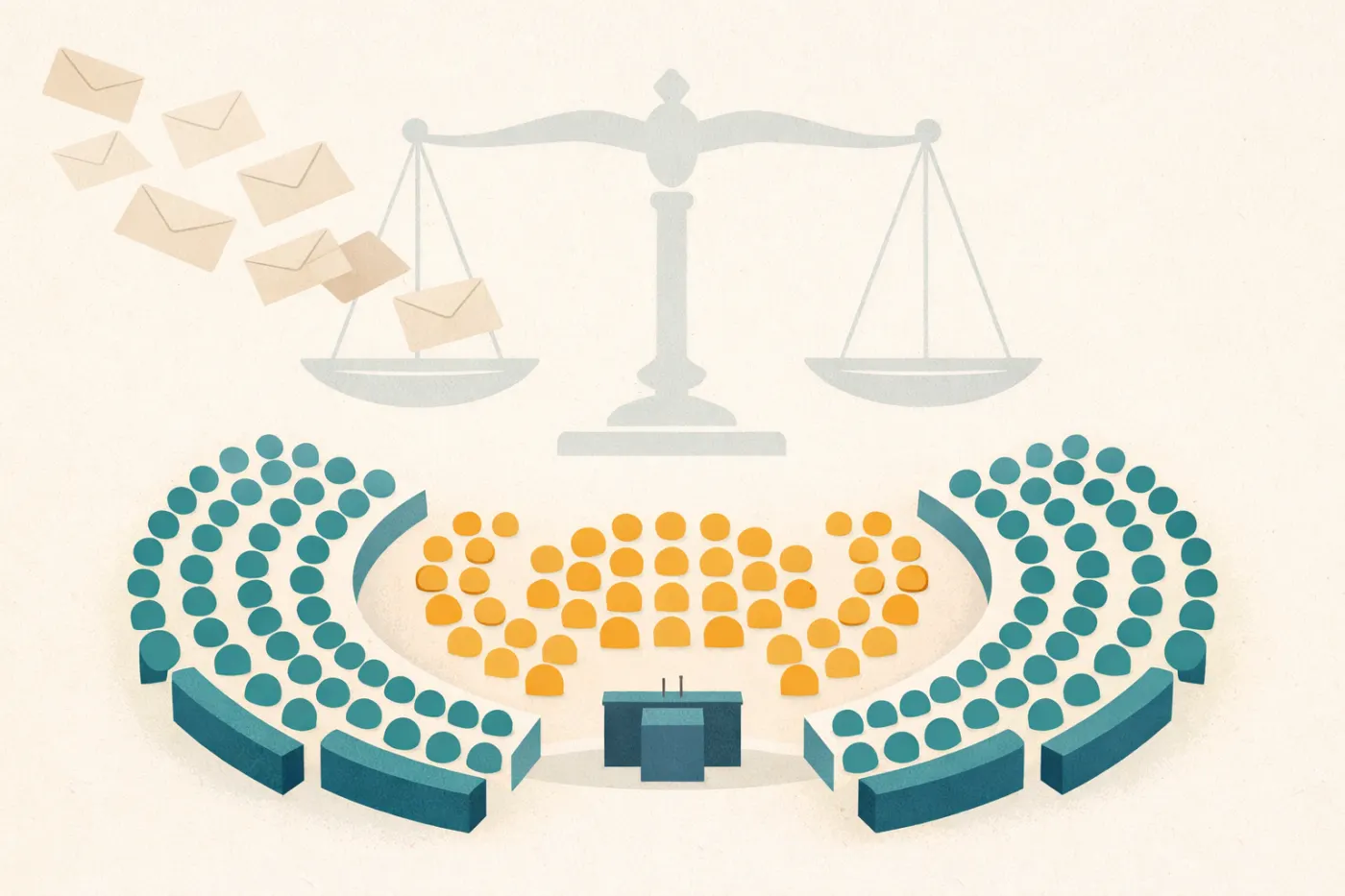
Americans vote on Tuesday 3 November in the first national election of Donald Trump's second term, with every forecaster now pointing the same way on the House and the Senate resting on a handful of toss-ups.
What happened
In the final week the ratings moved in one direction. Sabato's Crystal Ball shifted sixteen House races towards the Democrats and now rates 225 seats at least 'lean Democratic' against 193 'lean Republican', with 17 toss-ups; its generic-ballot models, it wrote on Thursday, 'predict blue wave next week'. The Cook Political Report's House ratings show 220 seats leaning or safer for Democrats with 17 toss-ups. CNN's live coverage on Thursday led with a forecaster moving 63 races in the Democrats' favour. Democrats lead the generic ballot by about eight points in the RealClearPolitics average and by up to eleven in some aggregates.
The Senate is closer. Republicans hold a 51–49 majority. Cook's ratings, updated on 20 October, give Democrats 47 seats once the 34 not up this year are counted, meaning they need four of seven toss-up races to take the chamber. Sabato calls it a 'slight advantage' for Democrats. A CNN poll in Kansas found no clear leader between Republican Roger Marshall and his Democratic challenger. Prediction-market traders on Kalshi put Democrats at about 91% to win the House and 65% to win the Senate.
The president is campaigning as if the forecasts were wrong. He told supporters he is working harder on these midterms than any president before him, rallied in Corpus Christi and Lubbock, where he announced a rollback of methane rules from the Biden years, campaigned in South Carolina five days out, cancelled a Kansas rally, and plans nearly two dozen telerallies in the closing days in Texas, Kansas, Iowa, New York, Pennsylvania and Michigan. Asked about the surveys, he called them 'fake'. House Speaker Mike Johnson, meanwhile, said publicly that there would be a peaceful transfer of power in Congress if Democrats win.
Why it matters
The Fed held rates last week six days before this vote and left December open; the administration has been fighting a war with Iran and an oil price near $115; and the president has told allies that strikes on Iran are possible after the election. A Democratic House would bring subpoena power and a budget veto on all of it. A Democratic Senate would bring the power to block nominations, including to the Fed and the courts. The difference between the two forecasts, the House at 91% and the Senate at 65%, is the difference between a check on spending and a check on appointments.
The other thing at stake is the count itself. A president calling the polls fake before the vote, and a Speaker volunteering a commitment to a peaceful transfer, are both signals about how a losing result might be received. Likud's mid-count fraud claim in Israel this week, dismissed by police and the elections committee within a day, is the most recent reminder that the allegation can arrive before the evidence.
The rhyme
The midterm penalty is the most reliable regularity in American politics. Four of the last eight midterms were wave losses of thirty seats or more for the president's party; two were modest losses; two were gains, both under presidents at wartime or boom-time approval levels Trump does not have. The size of the penalty has tracked approval and the generic ballot, and both point to a wave. The Senate is where the pattern weakens: in 2018 Republicans lost forty House seats and gained two in the Senate because of the map.
The second, weaker rhyme is with elections where the losing side alleged fraud while institutions held. The pattern's cases, from Mexico 2006 to Brazil 2022, almost always ended with the result standing. What they did not always avoid was unrest. The pre-vote signals this week, the 'fake' polls and the Speaker's pledge, are the pattern's early markers, not yet its substance.
The patterns below are the historical set-ups this story most resembles. The score is a 0–100 measure of how closely the conditions match; the "where it breaks" note is as important as the match.
The president's party has lost seats in the House of Representatives in every midterm election since 1934 except three. The size of the loss tracks the president's approval rating and the generic ballot; the direction almost never changes. The Senate, with only a third of seats contested, is far less predictable.
ThenIn 1994, 2006, 2010 and 2018 a president in the low 40s with the opposition ahead on the generic ballot lost thirty to sixty-three House seats. In 2014 and 2022 the loss was smaller but still cost the chamber. Only presidents above 60% approval, in 1998 and 2002, gained.
NowA generic-ballot deficit of about eight points, forecasters moving dozens of races one way in the final fortnight, a single-digit House majority that even 2022's nine-seat loss would erase, and a Senate map where Democrats need four of seven toss-ups.
Where it breaks: The 2022 case shows waves can fail to arrive when the opposition is defined by an unpopular issue of its own; abortion did that for Democrats then. Nothing comparable is visible for Republicans this year, which keeps the House odds high, but the Senate's structural tilt means the pattern's cleanest prediction stops at one chamber.
A losing or trailing camp, often an incumbent, alleges fraud during or after the count without evidence that withstands scrutiny, while election authorities, courts and police defend the process. Results usually stand, but the claims can fuel protest and unrest.
ThenIn Mexico 2006, the United States 2020, Peru 2021 and Brazil 2022 the trailing side called the result fraudulent, institutions held and the result stood, twice after serious unrest.
NowNo vote has been cast, but the president is calling the polls fake and the Speaker has pre-emptively promised a peaceful transfer, the pattern's warning markers rather than its events.
Where it breaks: This is a congressional election with 435 separate counts, not a single presidential result, which makes a unified fraud narrative harder to sustain and a transfer of a chamber harder to resist. The score is low because the pattern has not started; it is listed because its first signals have.
The sixth strike on the airport in a month came after an evacuation warning and as government forces, backed by Saudi air power, opened an offensive towards the Red Sea coast near Bab el-Mandeb.
Rafael Grossi told the Security Council that remote monitoring shows no reconstruction since the June 2025 strikes, while Tehran keeps inspectors out of most sites and announces a new enrichment plant at Isfahan.