Exxon and Shell Profits Double on Iran War: Is a Windfall Tax Next?
Oil majors roughly doubled profits as Brent topped $110. Europe faces calls for a levy; history suggests the odds split sharply by continent.
By Rhyme Desk3 min read11 sourcesRhyme index 72
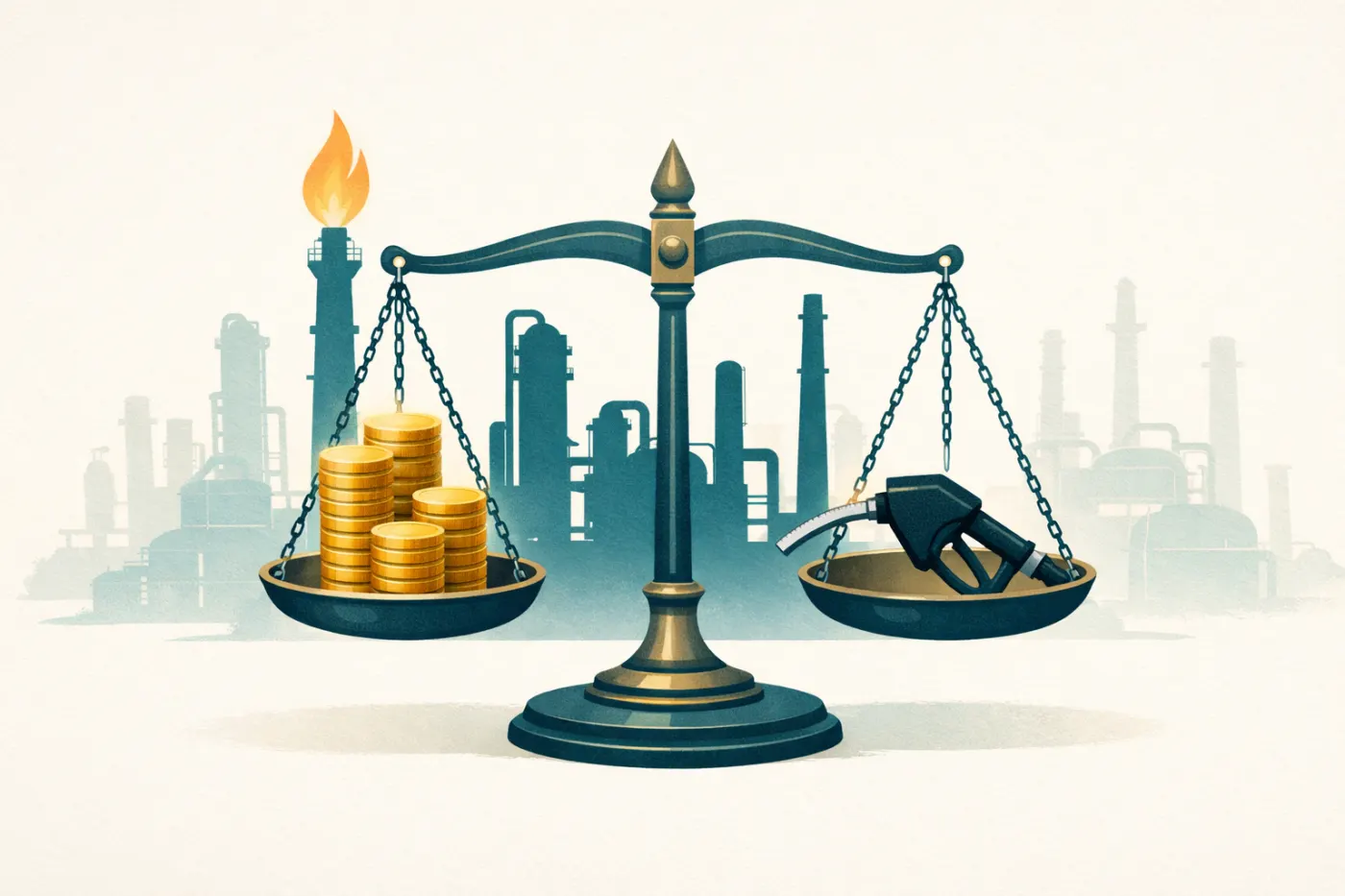
ExxonMobil earned $15.4bn and Shell $10.8bn in the third quarter, each roughly doubling on a year earlier, as the war on Iran held Brent crude above $110 a barrel.
What happened
ExxonMobil reported third-quarter net income of $15.4bn on 30 October, up about 104% from $7.5bn a year earlier. On an adjusted basis it earned $17.5bn, or $4.23 a share, ahead of an analyst consensus of about $4.12, on revenue of $113.2bn. Refining made about $7.2bn, slightly more than oil and gas production.
Shell reported a day earlier. Its adjusted earnings were $10.81bn, up from $5.43bn and above a consensus of $9.92bn, making it the company's strongest quarter since the second quarter of 2022. It posted a record refining margin of $42 a barrel, and its shares reached an all-time high. Chevron earned $9.9bn, up from $3.5bn. BP's underlying replacement-cost profit was $8.46bn, its highest since 2008, despite a $4.1bn pre-tax impairment.
The driver is the war the United States and Israel launched on Iran in late February. Brent futures for January 2027 closed at $113.43 on 30 October; West Texas Intermediate closed at $104.12. Shell's chief executive, Wael Sawan, said: "We're now seeing more and more structural stability in that higher oil price," citing rapid draws on inventories.
Exxon returned $9.4bn to shareholders in the quarter and announced $20bn of buybacks for 2027. Its chief executive, Darren Woods, called windfall taxes a "misguided policy" last quarter. NPR reports that executives did not mention them on this week's calls.
Why it matters
The profits land as inflation climbs across Europe. October flash figures put Italy at 5.4%, up from 4.2%, Spain at 4.9% and France at 3.4%, its highest since January 2024. Germany's rate fell to 2.8%, which Euronews attributes to a targeted tax cut. The European Central Bank raised rates in September and held them at 2.5% on 29 October.
Pressure for a levy is already on record. In August the finance ministers of Germany, Italy, Austria, Poland and Portugal, along with Spain's economy minister, asked for an "EU-wide framework to tax windfall profits." It is not clear what, if anything, ministers agreed when they met in Dublin in September. Britain's North Sea levy already brings the combined tax rate to 78% and is expected to raise about £8bn this year.
In Washington, three bills are pending: Senator Sheldon Whitehouse's excise tax on crude windfall profits, with rebates to taxpayers; a House bill titled the Iran War Oil Crisis Windfall Profits Tax Act; and a plan from Senators Ron Wyden, Chuck Schumer and Michael Bennet to raise the excise tax on large oil companies' buybacks from 1% to 25%. None appears to have passed.
The White House has moved in the opposite direction. In August Donald Trump said Chevron and Exxon "were making too much money based on a shortage." At midterm rallies he now says US firms are "making a freaking fortune." Voters go to the polls on 3 November.
The rhyme
Oil shocks have produced calls for windfall taxes for nearly half a century, but they have become law only some of the time. The United States passed one in 1980, after the Iranian revolution. It raised far less than projected once prices collapsed and was repealed in 1988. Both sides still cite it: the American Petroleum Institute calls today's proposals "misguided" and compares them to the 1980 tax.
Later US price spikes, in 1990, 2005 and 2008, brought hearings, amendments and campaign promises, but no law. Europe in 2022 went the other way. Britain's Energy Profits Levy and the EU's solidarity contribution were both enacted within months of Russia's invasion of Ukraine.
The record splits by continent. Europe's rising inflation and the six-country letter point towards action, while Washington's politics point away from it. In every past case, the biggest unknown was how long high prices would last.
The patterns below are the historical set-ups this story most resembles. The score is a 0–100 measure of how closely the conditions match; the "where it breaks" note is as important as the match.
A war or supply shock sends oil prices and oil-company profits to records while households pay more for fuel. Governments come under pressure to tax the windfall. The proposals arrive every time, but they become law only sometimes: rarely in the United States after 1980, and readily in Europe in 2022. Enacted levies tend either to raise less than promised because prices fall, or to outlast the emergency that justified them.
ThenA war or supply shock pushes crude sharply higher, oil majors post record quarterly profits while consumers pay more for fuel, and legislators table windfall levies, often with rebates attached. In the United States, industry lobbying and the memory of 1980 have usually won; in Europe in 2022, levies passed within months.
NowThe Iran war has kept Brent above $110, the majors have roughly doubled their profits, and refining margins are at records. Six EU governments have asked for an EU-wide framework, Britain's levy already runs at a 78% combined rate, and three US bills sit in Congress while the president celebrates the profits.
Where it breaks: Unlike 1980 or 2008, the US president is openly cheering high oil profits days before a midterm, which pushes the odds of a US tax down. Europe has a fresh 2022 template and higher inflation, which pushes its odds up, although Germany's choice of fuel tax cuts and Exxon's legal challenge to the 2022 EU levy temper that.
The Fed kept rates unchanged a week before the midterms, upgraded its growth language and left December open. Markets, not the statement, are pricing the next hike.