Skip to content
rhyme.news
Thursday 29 October 20269 stories16 patterns in the libraryEvery story cross-referenced with the historical record
Historical pattern · 1994 – 2023

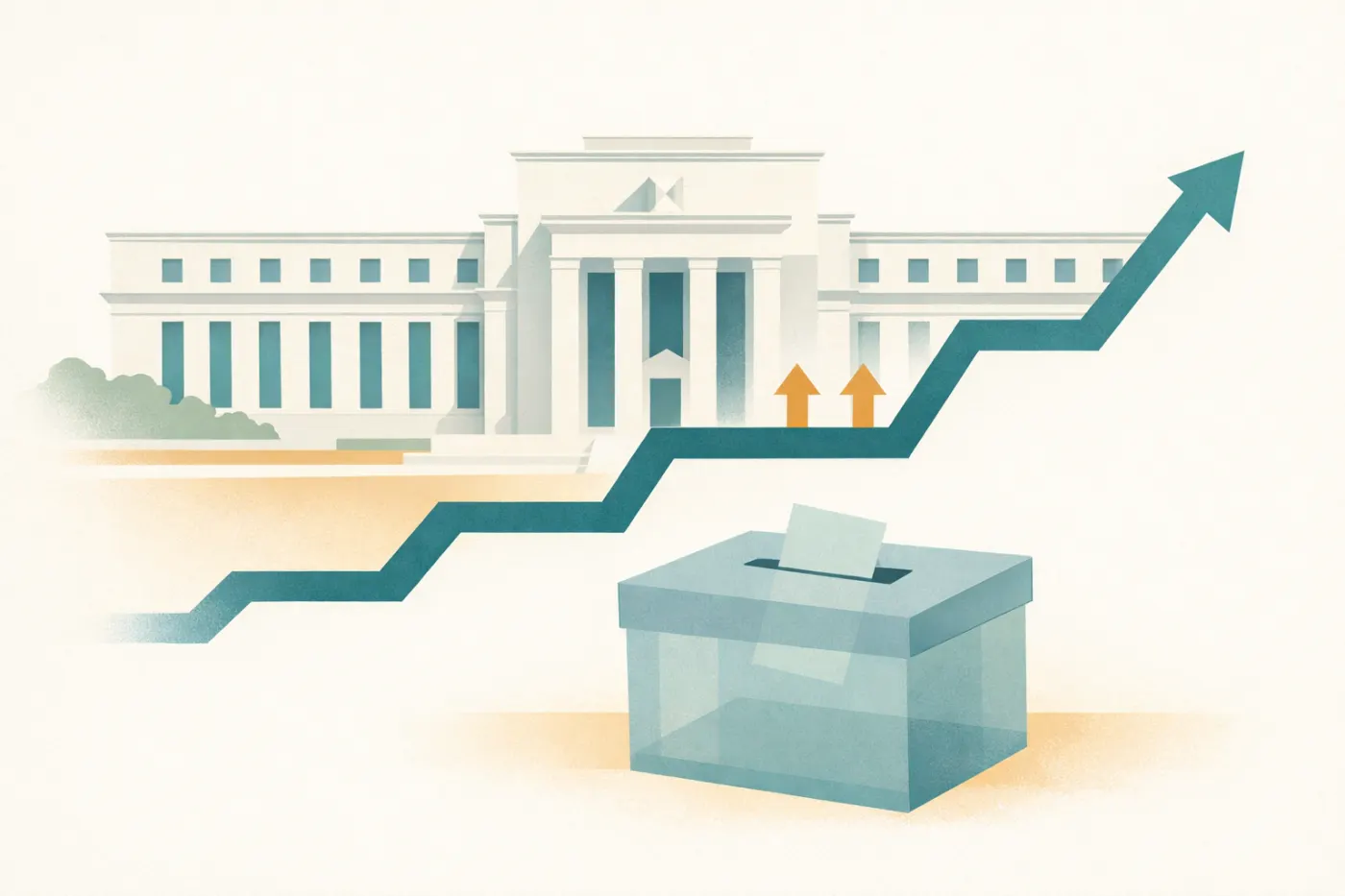
The pre-election pause that says it is not a peak

A central bank stops hiking weeks before an election, keeps a tightening bias in its language, and markets price the next hike for the following meeting. Sometimes the hike comes on schedule. More often the pause quietly becomes the top of the cycle.

The cases

5 episodes
  1. 1994

    Greenspan holds in September, hikes 75bp a week after the midterms

    After a 50bp hike in August 1994 the Fed held at its September meeting with inflation worries intact and the November midterms approaching.

    What happened next: On 15 November 1994, days after the election, the Fed raised rates by 75bp to 5.5%, with one more hike in February 1995 before the cycle ended.hike resumed

  2. 2000

    The June 2000 hold with a tightening bias

    After a 50bp hike in May 2000 took the funds rate to 6.5%, the Fed held in June and kept language warning that risks were weighted towards inflation through the presidential election.

    What happened next: No further hike came. The next move was an emergency 50bp cut in January 2001 as the dot-com bust spread to the real economy.pause was the peak

  3. 2006

    Bernanke's August pause with a hawkish dissent

    After seventeen consecutive hikes the Fed paused at 5.25% in August 2006. Richmond Fed President Jeffrey Lacker dissented in favour of a further hike, and did so again at the next three meetings. Midterms were three months away.

    What happened next: The hike Lacker wanted never came. The next move was a 50bp cut in September 2007 as the housing bust turned into a credit crisis.pause was the peak

  4. 2023

    Powell's June 'skip' with projections for two more hikes

    The Fed held at 5–5.25% in June 2023 after ten straight increases, while its projections showed two more hikes and officials stressed the pause was not a stop.

    What happened next: The Fed raised rates by 25bp at the very next meeting in July 2023.hike resumed

  5. 2023

    The September 2023 hold with one hike still pencilled in

    The Fed held at 5.25–5.5% in September 2023. The median projection still showed one more hike in 2023 and markets partly priced it.

    What happened next: The extra hike never came. July 2023 proved to be the peak and the first cut followed in September 2024.pause was the peak

How these cases resolved

Pause turns out to be the peak; next move is a cut60%
Tightening resumes within two meetings40%

Share of the 5 cases above that resolved this way. Small samples: treat as a prior, not a forecast.

Signals that mark this pattern
  • The statement keeps a tightening lean or says more data is needed, rather than declaring the cycle over
  • At least one voter dissents in favour of a hike
  • Futures markets price a hike at the next meeting with high confidence
  • An election falls between the pause and the next scheduled meeting
  • Financial conditions are already tightening on their own (credit spreads, long yields)
The lesson
When the Fed pauses but insists the cycle is not over, the record leans towards the pause being the top. When it does hike again, it tends to do so at the very next meeting, so the first post-election decision usually settles the question.

Stories echoing this pattern