Skip to content
rhyme.news
Thursday 29 October 20269 stories16 patterns in the libraryEvery story cross-referenced with the historical record
Historical pattern · 1965 – 2019

The central bank under open political pressure

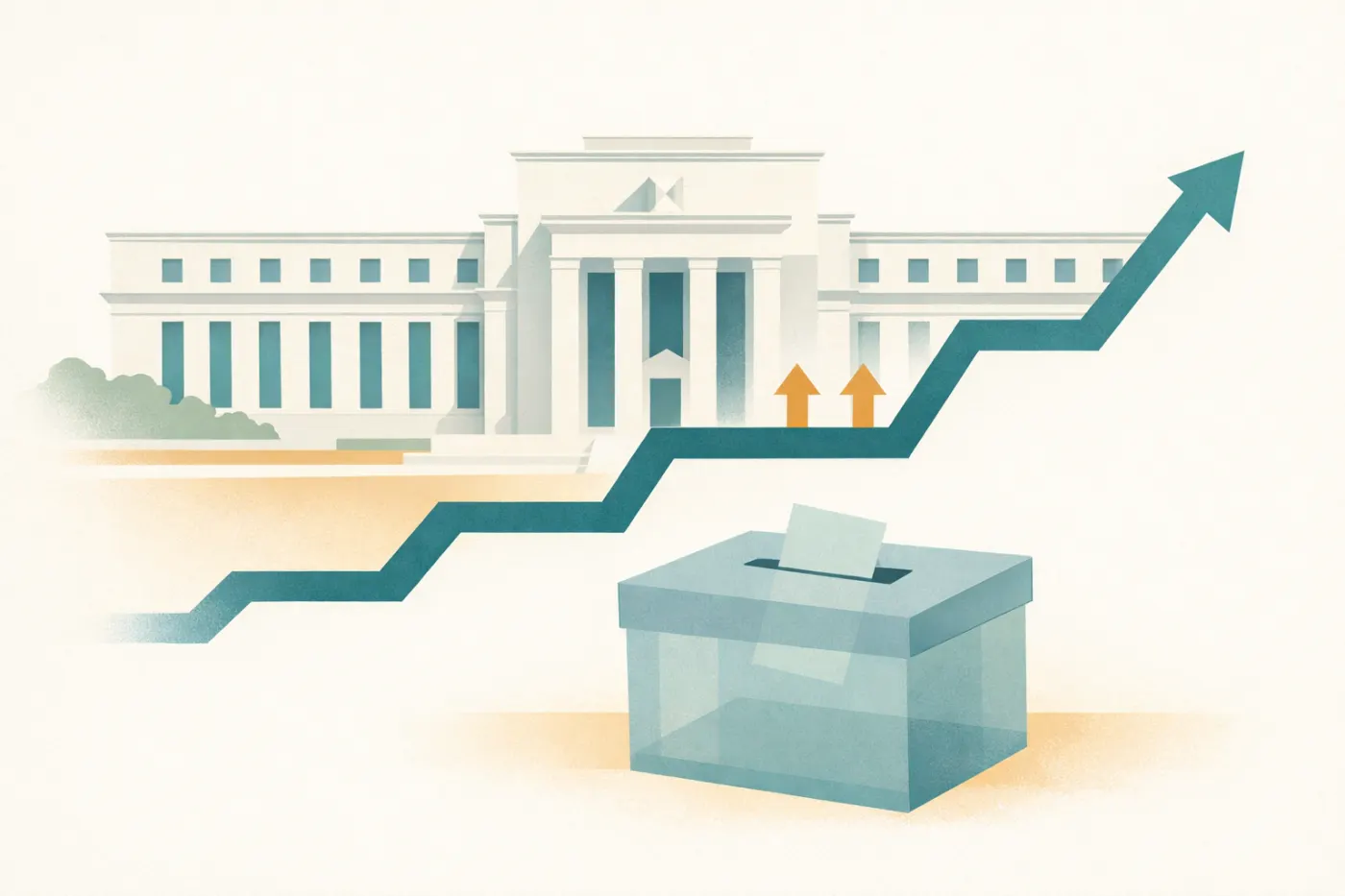
A president leans publicly on the central bank to keep money easy while inflation is above target. The bank either holds its course, bends, or buys peace with a compromise. The outcome for inflation depends almost entirely on which of the three it chooses.

The cases

4 episodes
  1. 1965

    Martin raises the discount rate over Johnson's objections

    In December 1965 Fed Chair William McChesney Martin raised the discount rate as Vietnam and Great Society spending heated the economy. President Johnson summoned him to his Texas ranch to complain.

    What happened next: The Fed held its ground that winter, though it eased in 1967. Inflation, below 2% in 1965, climbed through the late 1960s as fiscal spending outran monetary restraint.bank held course

  2. 1972

    Burns keeps policy easy into Nixon's re-election

    Fed Chair Arthur Burns, under sustained private pressure from the Nixon White House, kept money growth rapid through 1972 while wage and price controls masked inflation.

    What happened next: Inflation surged after the controls lapsed, reaching double digits in 1974. The episode became the textbook case of a central bank yielding to electoral politics.bank yielded

  3. 1979

    Volcker tightens through the 1980 election and a recession

    Paul Volcker's Fed raised rates sharply from October 1979, with President Carter facing re-election and the economy sliding into recession in 1980.

    What happened next: Carter lost, the economy suffered a second recession in 1981–82, and inflation fell from 13% to under 4% by 1983. The Fed's credibility was rebuilt for a generation.bank held course

  4. 2019

    Powell delivers 'insurance' cuts amid presidential attacks

    President Trump repeatedly attacked Fed Chair Jerome Powell in 2019 and demanded lower rates. With inflation below target and trade tensions rising, the Fed cut three times.

    What happened next: The cuts were framed as insurance against a slowdown and inflation stayed low into 2020. Whether they were a response to pressure or to data remains disputed.compromise

How these cases resolved

Bank holds course; inflation contained over 2–3 years50%
Bank yields; inflation worsens materially25%
Compromise easing; outcome depends on the cycle25%

Share of the 4 cases above that resolved this way. Small samples: treat as a prior, not a forecast.

Signals that mark this pattern
  • Public presidential criticism of the chair or attempts to remove individual governors
  • Inflation above target while the administration argues it is temporary
  • A decision falling within weeks of a national election
  • Officials insisting that politics played 'no role'
The lesson
The cases where the Fed yielded are few but expensive. The cases where it held firm cost a presidency or a recession, and bought a decade of low inflation.

Stories echoing this pattern