Skip to content
rhyme.news
Sunday 1 November 202611 stories18 patterns in the libraryEvery story cross-referenced with the historical record
Historical pattern · 1980 – 2022

The oil-shock windfall tax

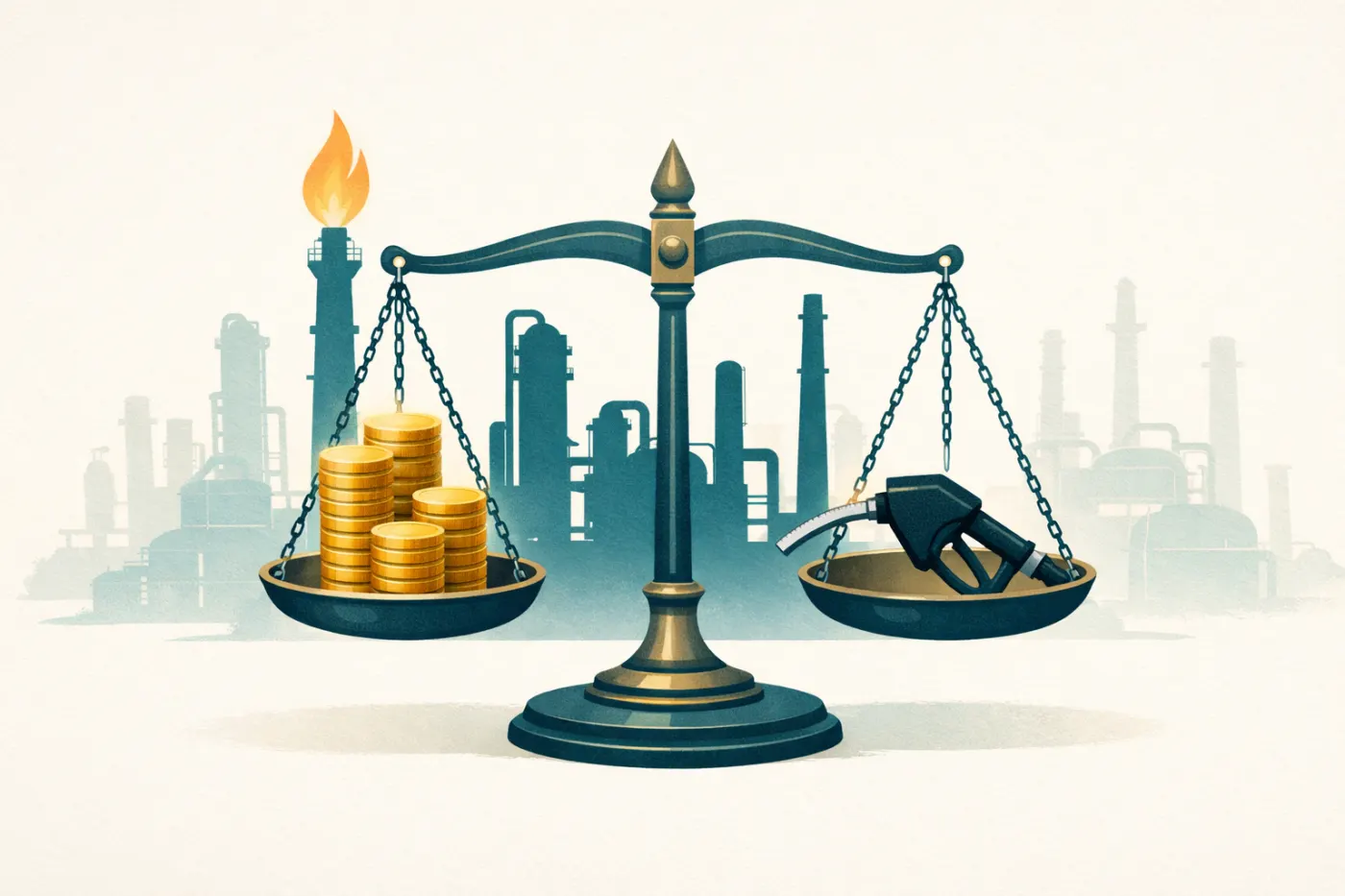
A war or supply shock sends oil prices and oil-company profits to records while households pay more for fuel. Governments come under pressure to tax the windfall. The proposals arrive every time, but they become law only sometimes: rarely in the United States after 1980, and readily in Europe in 2022. Enacted levies tend either to raise less than promised because prices fall, or to outlast the emergency that justified them.

The cases

6 episodes
  1. 1980

    US Crude Oil Windfall Profit Tax Act

    After the 1979 Iranian revolution doubled oil prices, Congress passed an excise tax on the gap between market and base prices for domestic crude.

    What happened next: Enacted in 1980. It raised far less than projected once prices collapsed in the mid-1980s and was repealed in 1988.enacted-then-repealed

  2. 1990

    The Gulf War price spike

    Iraq's invasion of Kuwait sent crude prices and oil profits sharply higher, and members of Congress floated windfall taxes.

    What happened next: None passed. Prices fell back quickly after Desert Storm in early 1991, and the pressure faded.not-enacted

  3. 2005

    Hurricane Katrina and record Exxon profits

    Fuel prices spiked after Katrina while Exxon posted record quarterly profits. Oil executives were called before the Senate in November 2005.

    What happened next: Windfall-tax amendments failed, and industry lobbying prevailed.not-enacted

  4. 2008

    $147 oil in an election year

    Crude hit a record $147 a barrel, and Barack Obama campaigned on a windfall tax to fund consumer rebates.

    What happened next: It was never enacted. Prices crashed in the second half of 2008 as the financial crisis hit.not-enacted

  5. 2022

    UK Energy Profits Levy

    After Russia invaded Ukraine, Britain imposed a 25% levy on North Sea oil and gas profits in May 2022.

    What happened next: Enacted, then raised and extended, bringing the combined rate to 78%. It is still running.enacted-lasting

  6. 2022

    EU solidarity contribution

    The EU agreed a temporary levy of at least 33% on fossil-fuel companies' profits above a baseline, in response to the post-invasion energy crisis.

    What happened next: Enacted as a temporary measure. Exxon challenged it in the EU courts.enacted-temporary

How these cases resolved

Proposed but not enacted50%
Enacted, but temporary or later repealed33%
Enacted and extended17%

Share of the 6 cases above that resolved this way. Small samples: treat as a prior, not a forecast.

Signals that mark this pattern
  • Record quarterly oil-company profits during a consumer fuel-price squeeze
  • A war or supply shock involving a major producer
  • High or rising headline inflation
  • An imminent election
  • Large share buybacks drawing political attention
  • An existing levy or recent precedent that can be copied
The lesson
Oil shocks reliably produce windfall-tax proposals, but these become law only where inflation pain is acute and the governing side is united behind them.

Stories echoing this pattern