Skip to content
rhyme.news
Sunday 1 November 202612 stories19 patterns in the libraryEvery story cross-referenced with the historical record
Historical pattern · 1914 – 2022

The ally who owns the switch

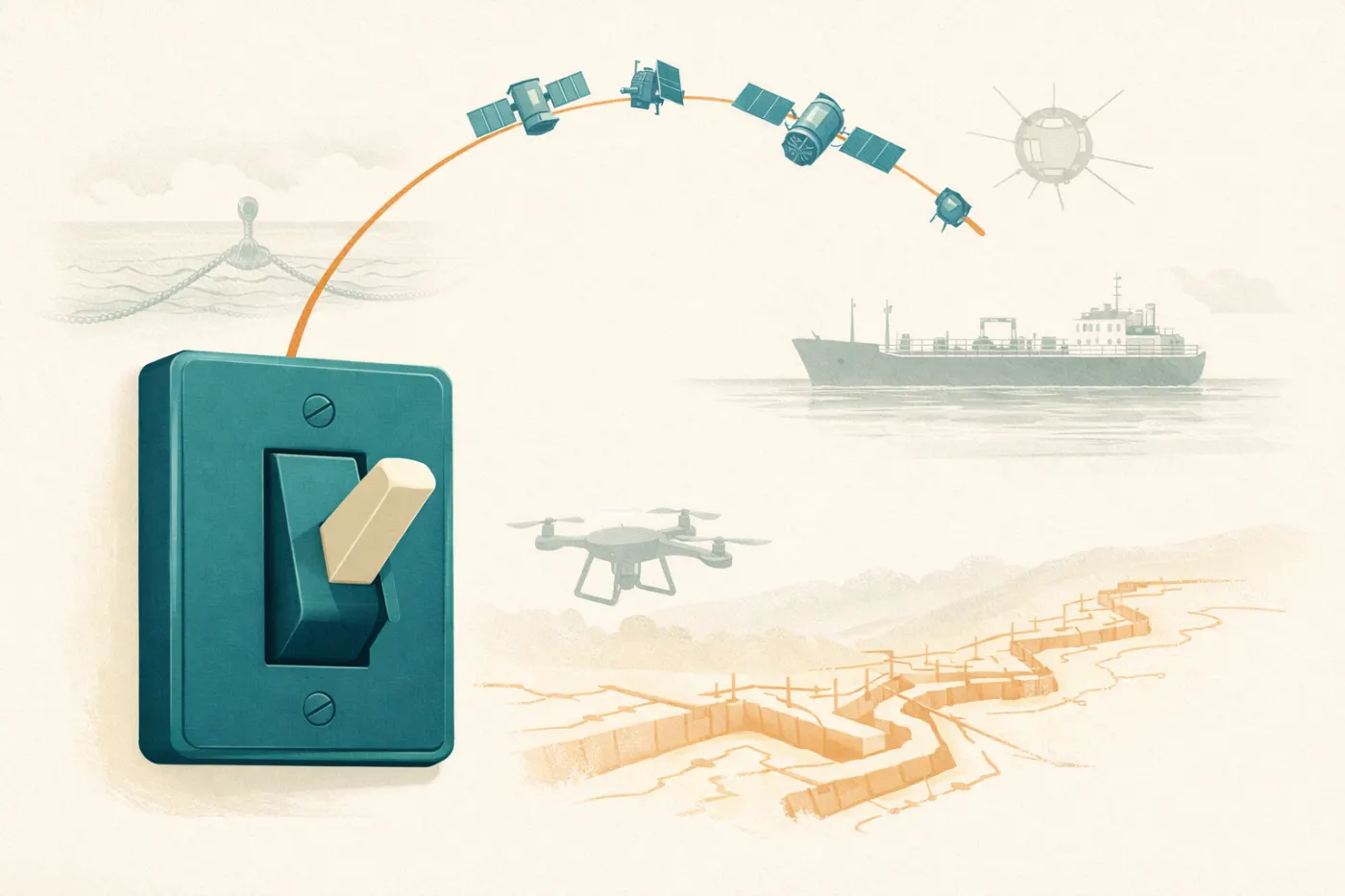
A partner controls a system a state depends on in war or crisis and restricts it to pursue its own aims. The dependent state, or an observer that draws the lesson, vows independence. Sovereign replacements usually arrive a decade or more later; in the short run the dependent either aligns more closely with the switch owner or loses the capability when it matters.

The cases

5 episodes
  1. 1914

    Britain cuts Germany's undersea cables

    On the outbreak of war Britain severed German cables, forcing Germany onto radio and neutral routes that Britain could intercept.

    What happened next: British codebreakers read the Zimmermann telegram in 1917; the United States, wary of British control of global communications, backed the creation of RCA in 1919.sovereign-build

  2. 1956

    The US squeezes Britain at Suez

    Washington withheld support for sterling and emergency oil until Britain and France agreed to withdraw from the canal zone.

    What happened next: Britain chose closer alignment with the United States; France pursued autonomy, testing its own nuclear weapon in 1960 and leaving NATO's integrated command in 1966.split

  3. 1982

    France embargoes Argentina's Exocets

    During the Falklands War France halted deliveries to Argentina and assisted Britain with information on the missile.

    What happened next: Argentina's small stock of air-launched Exocets sank HMS Sheffield and the Atlantic Conveyor but ran out; Argentina lost the war.defeat

  4. 1999

    Kargil and GPS denial

    According to Indian officials, the United States declined India's request for GPS data during the Kargil conflict.

    What happened next: India approved its regional navigation system in 2006, launched the first satellite in 2013 and completed the NavIC constellation in 2016.sovereign-build

  5. 2022

    Musk declines Starlink coverage near Crimea

    SpaceX did not enable Starlink for a Ukrainian sea-drone attack on Sevastopol, as later acknowledged by Musk.

    What happened next: Ukraine's military connectivity moved onto the Pentagon-funded Starshield arrangement, deepening rather than ending dependence on the same supplier.realignment

How these cases resolved

Slow sovereign build-out (10–20 years)50%
Deeper alignment with the switch owner33%
Capability lost with no alternative in time17%

Share of the 5 cases above that resolved this way. Small samples: treat as a prior, not a forecast.

Signals that mark this pattern
  • A single foreign supplier provides a capability with no domestic substitute
  • The supplier's interests diverge from the dependent's war aims
  • Restrictions arrive without notice and are justified by contract or policy terms
  • Public pledges of diversification follow within weeks
  • Commercial or allied alternatives exist but at smaller scale
The lesson
Dependent states respond to a pulled switch by vowing independence, but the sovereign system arrives a decade or more later, so the real near-term choice is between realigning with the owner and spreading reliance across other suppliers.

Stories echoing this pattern