Skip to content
rhyme.news
Thursday 29 October 20269 stories16 patterns in the libraryEvery story cross-referenced with the historical record
Historical pattern · 1845 – 2019

The build-out where spending outruns cash

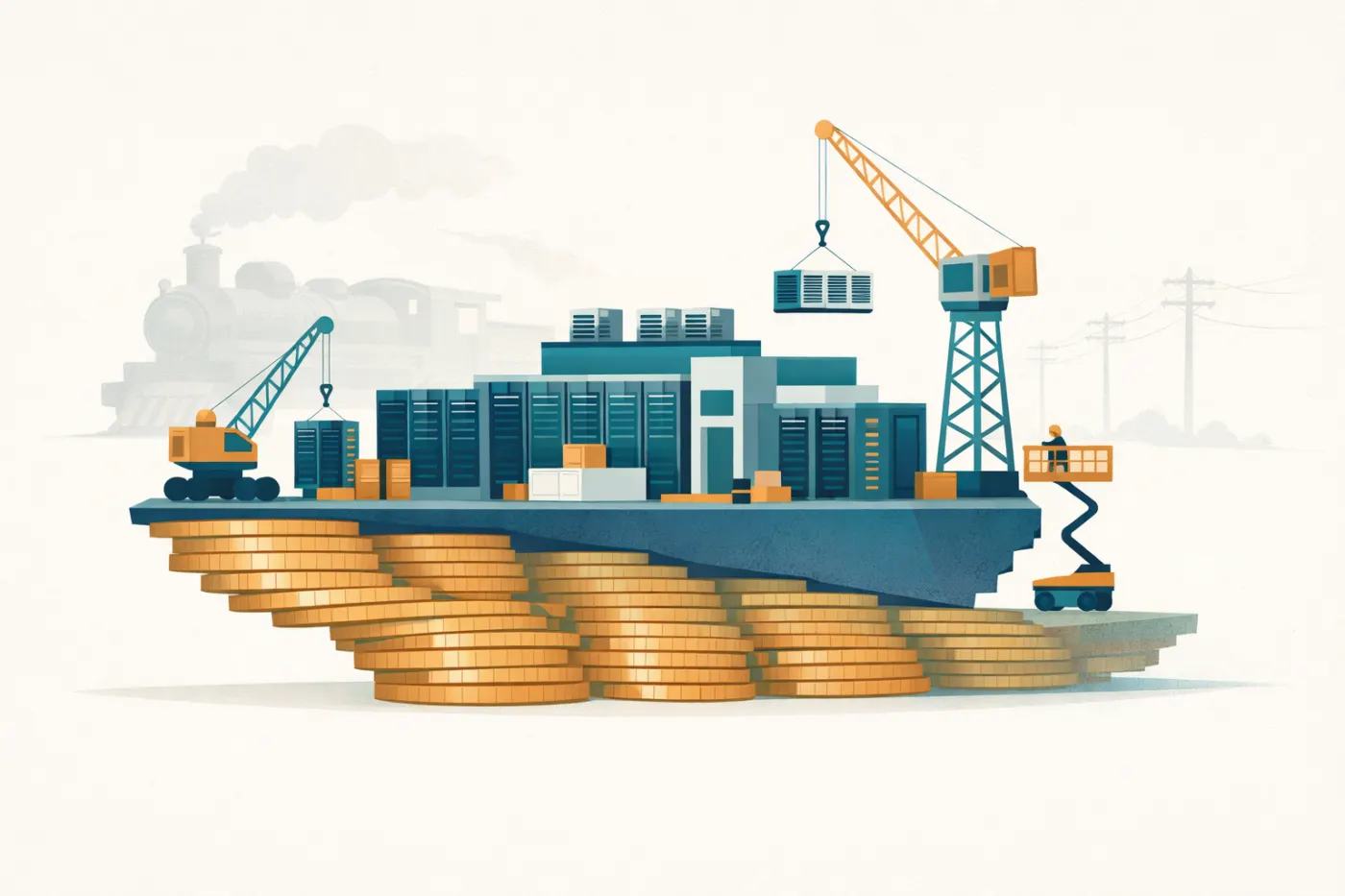
A transformative technology triggers a capital-spending race. Leaders spend beyond their cash flow, financing moves off the balance sheet, and investors cheer until they start to punish the spending instead. Most of these booms bust within three years, and the infrastructure survives to be used cheaply by someone else.

The cases

4 episodes
  1. 1845

    Britain's Railway Mania

    Hundreds of railway companies were floated between 1844 and 1846, with investors paying in calls on shares to fund construction far beyond plausible traffic.

    What happened next: Share prices collapsed in 1847 and many lines were never completed. The network that was built became the backbone of the Victorian economy, at a fraction of the capital's original value.bust; assets survived

  2. 1999

    The telecom and fibre build-out

    Carriers and start-ups spent on the order of half a trillion dollars laying fibre and buying spectrum on the expectation of exponential internet traffic, much of it debt-financed.

    What happened next: WorldCom, Global Crossing and dozens of others went bankrupt in 2001–02. Most of the fibre went dark for years and was later bought for cents on the dollar by the next generation of networks.bust; assets survived

  3. 2014

    The US shale boom

    Independent drillers ran negative free cash flow for years, funding drilling with high-yield debt on the strength of production growth rather than profits.

    What happened next: The 2014–16 oil price collapse pushed more than a hundred producers into bankruptcy. Production kept rising under new owners with cheaper capital.bust; assets survived

  4. 2015

    The hyperscale cloud build-out

    Amazon, Microsoft and Google ramped data-centre spending sharply from 2015 while investors questioned the returns.

    What happened next: Cloud revenue grew into the capital base. The spending was validated by demand and the companies' valuations rose with it.boom validated

How these cases resolved

Bust within three years; assets survive at lower cost75%
Sustained boom; spending validated by demand25%

Share of the 4 cases above that resolved this way. Small samples: treat as a prior, not a forecast.

Signals that mark this pattern
  • Negative free cash flow at the industry's leaders
  • Capital spending guidance raised even as results miss
  • Financing moved off balance sheet through leases, vehicles or vendor credit
  • Share prices falling on spending announcements rather than rising
  • Suppliers' valuations outrunning their customers'
The lesson
The technology usually wins. The companies that pay for the build-out usually do not. The one exception in the record, cloud computing, had paying customers before the capital arrived.

Stories echoing this pattern